Save A Satellite!
My Responsibilities: Game design that teaches an intuitive understanding of Newtonian physics using orbital mechanics. For ages 10+

PROCESS
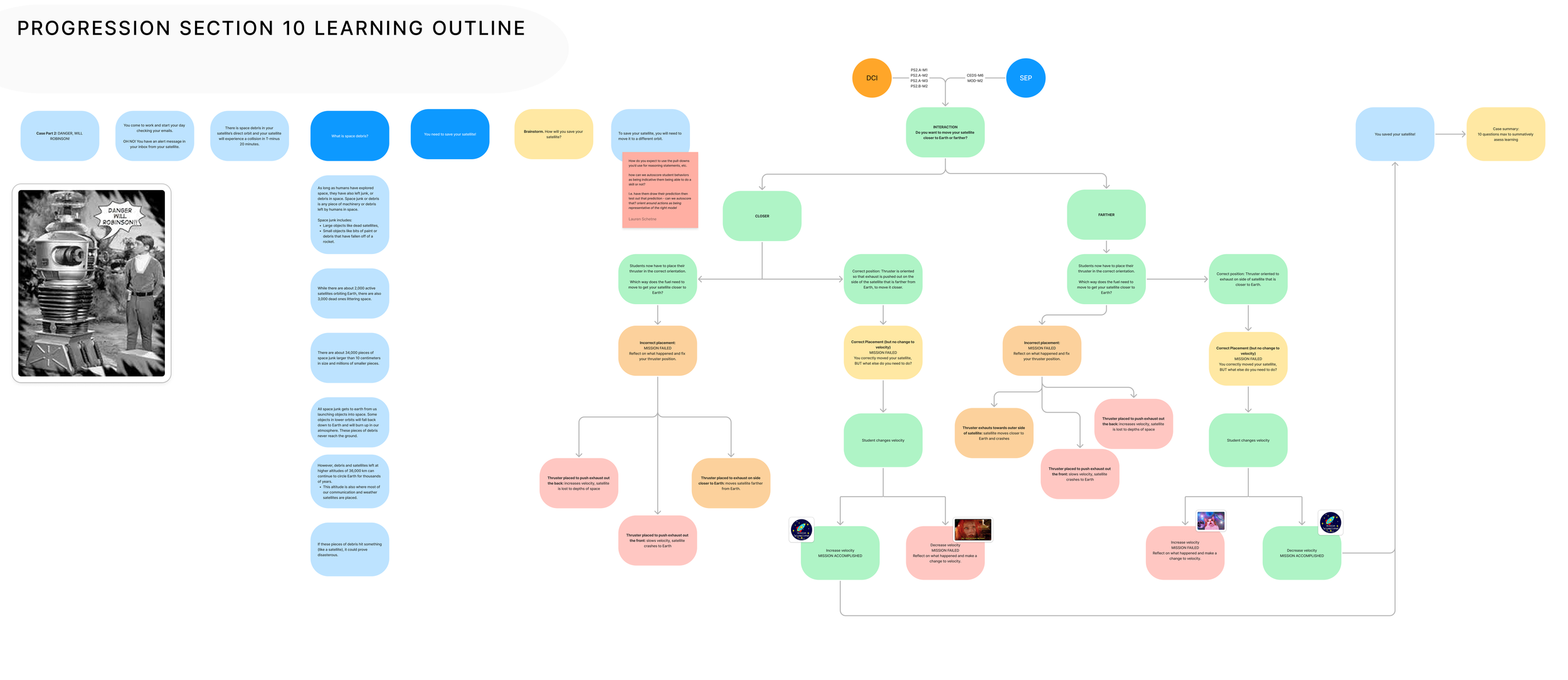
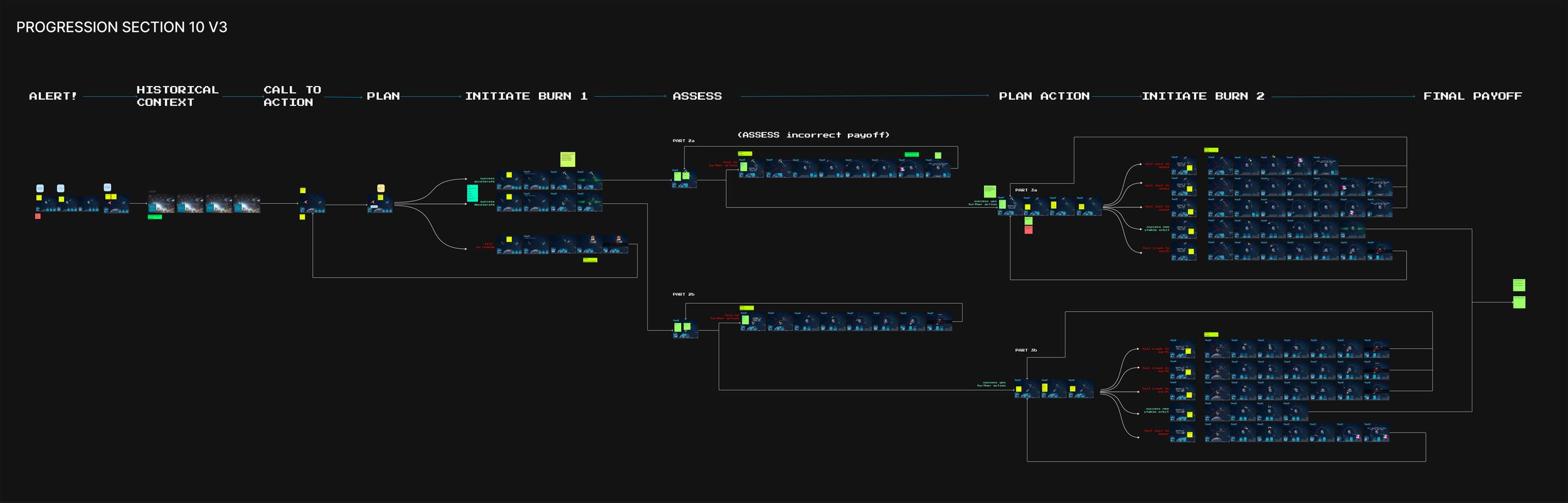
I am given the educational goals and initial story thoughts from the science writers. This is a proposal delivered as an outline approved by the director that we discuss at length to determine non-negotiables vs. negotiables.
A non-negotiable will often be around core learning principles that the product needs to meet in order to fulfill NGSS requirements, ie “Newton’s Second Law”
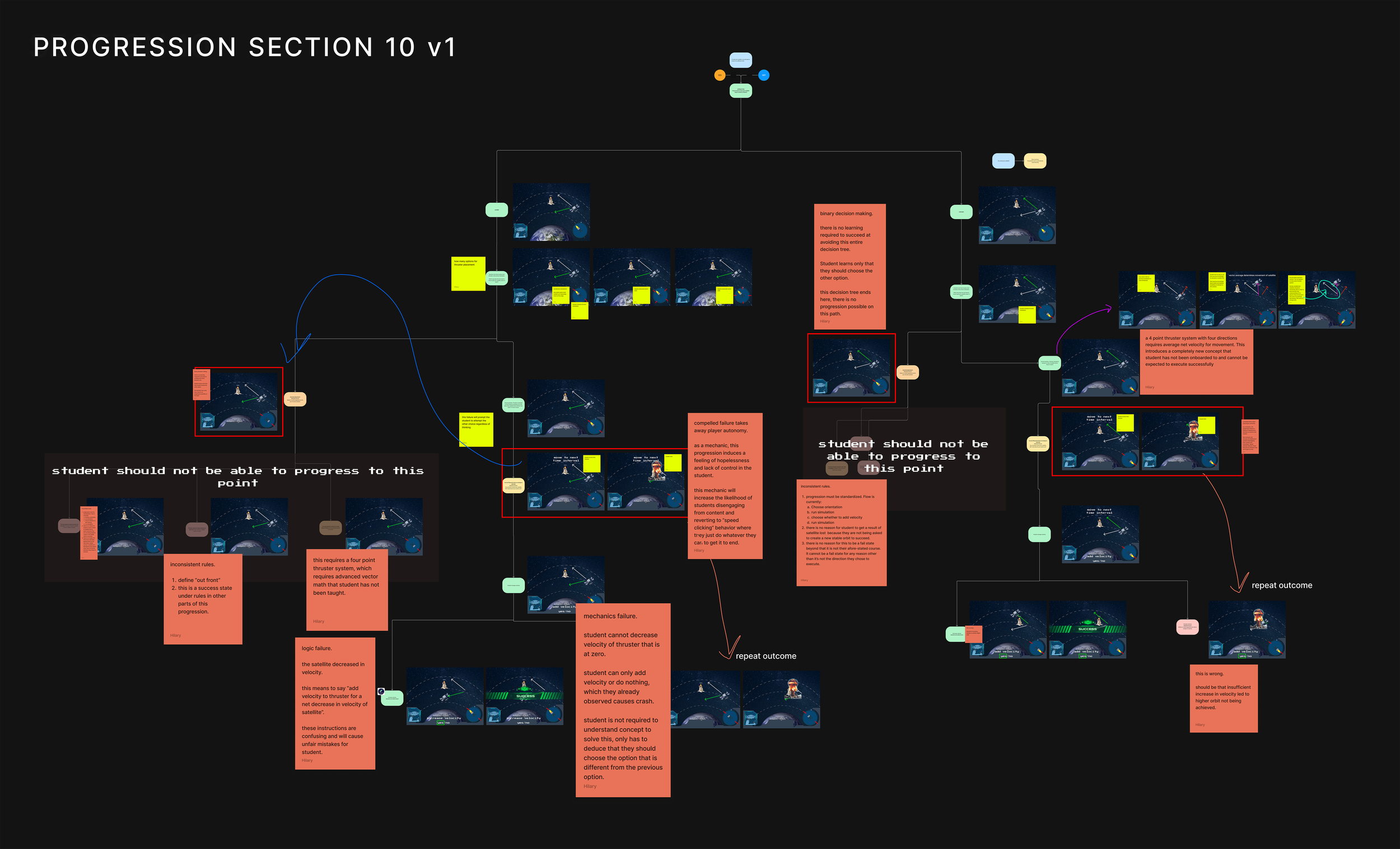
The science writer offers a first proposal on how the game design should reflect and reinforce the learning. I assess that initial idea and either develop their proposal or put together another idea that I believe will address the key behavior they want from the player more effectively.
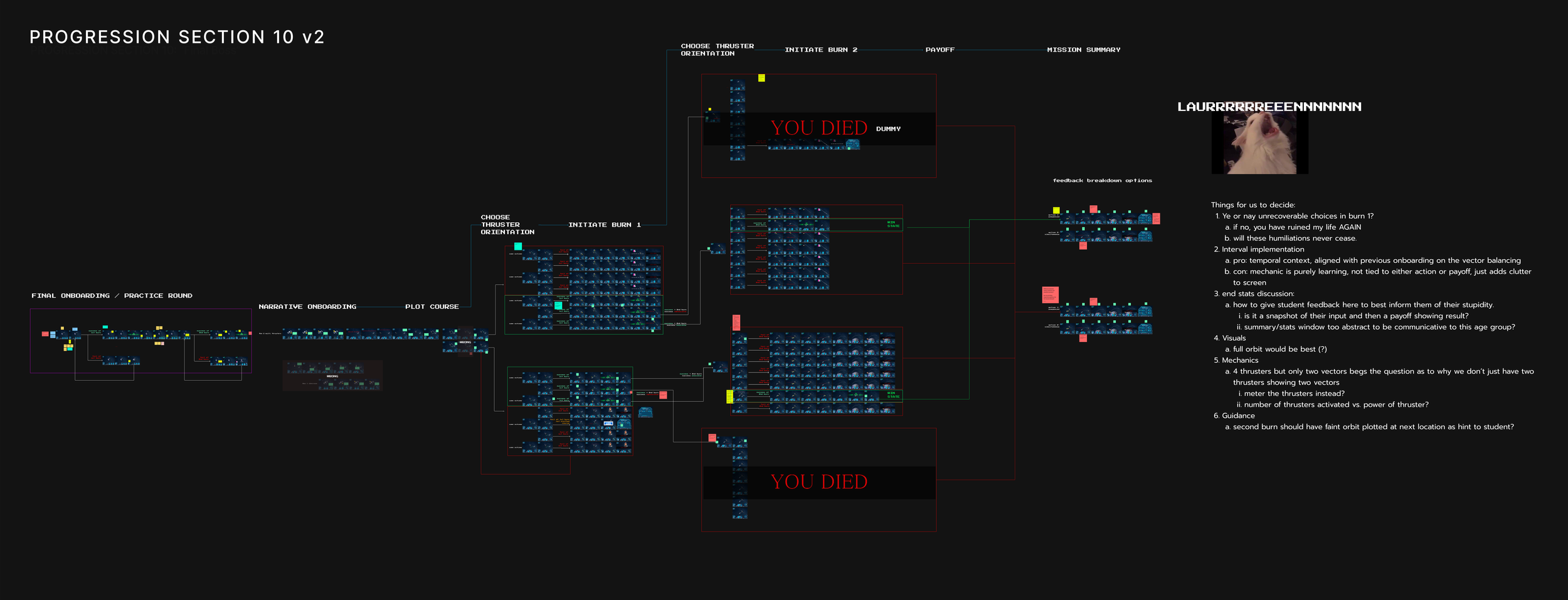
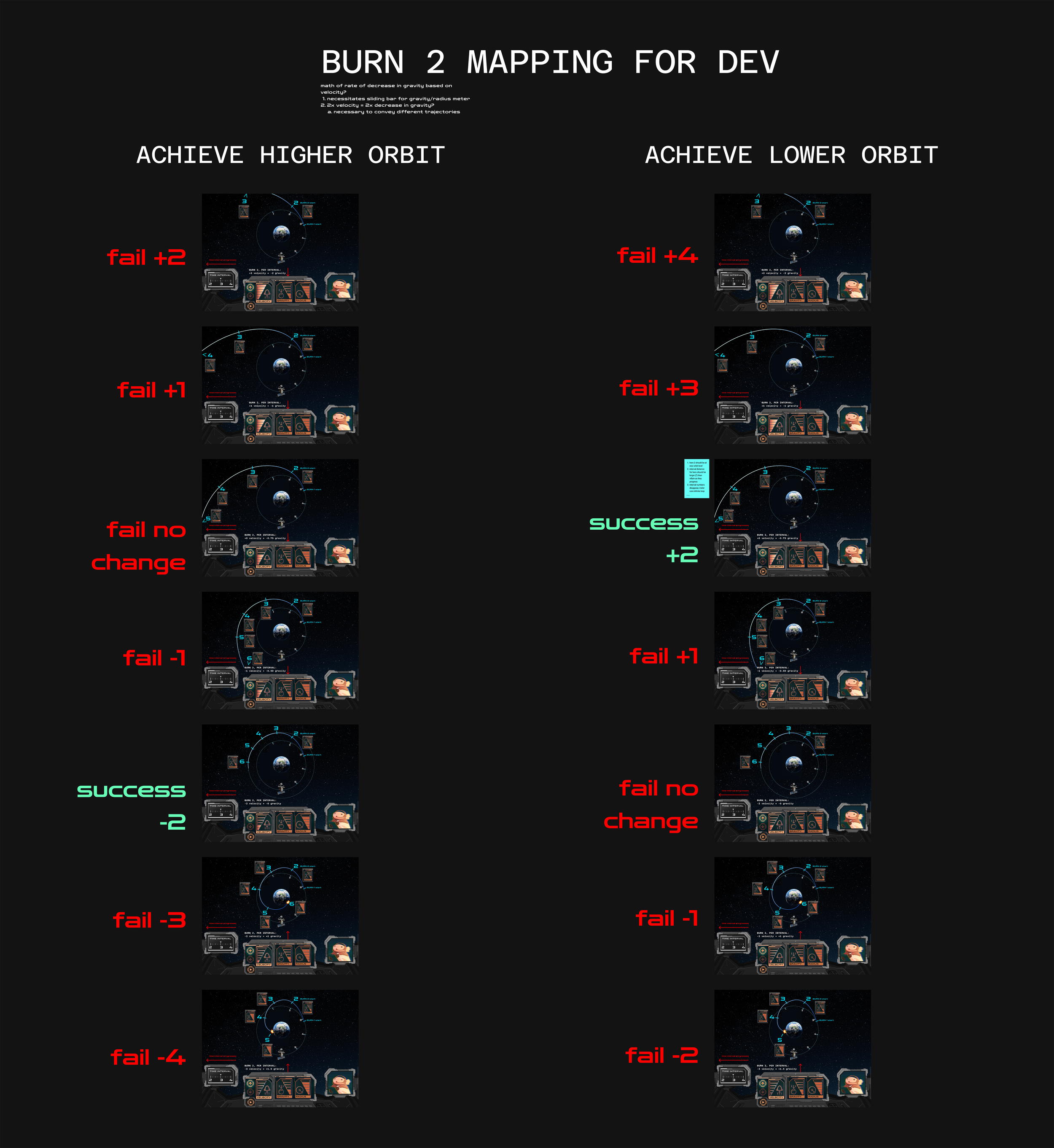
The core gameplay is negotiated at length with engineering, the science writers, myself, the production manager, and the director. I rapidly iterate on different mechanics and progressions, incorporating feedback from all stakeholders and presenting updated versions for analysis and discussion.
Throughout the course of negotiation, we assess:
Level of difficulty
Amount of onboarding required
Does the player behavior in the game SPECFICALLY and QUANTIFIABLY reinforce science concepts being taught
Can the success/failure of the player PROVE that they effectively applied their learning in order to achieve victory? Can this be quantified and succinctly reported to the teacher?
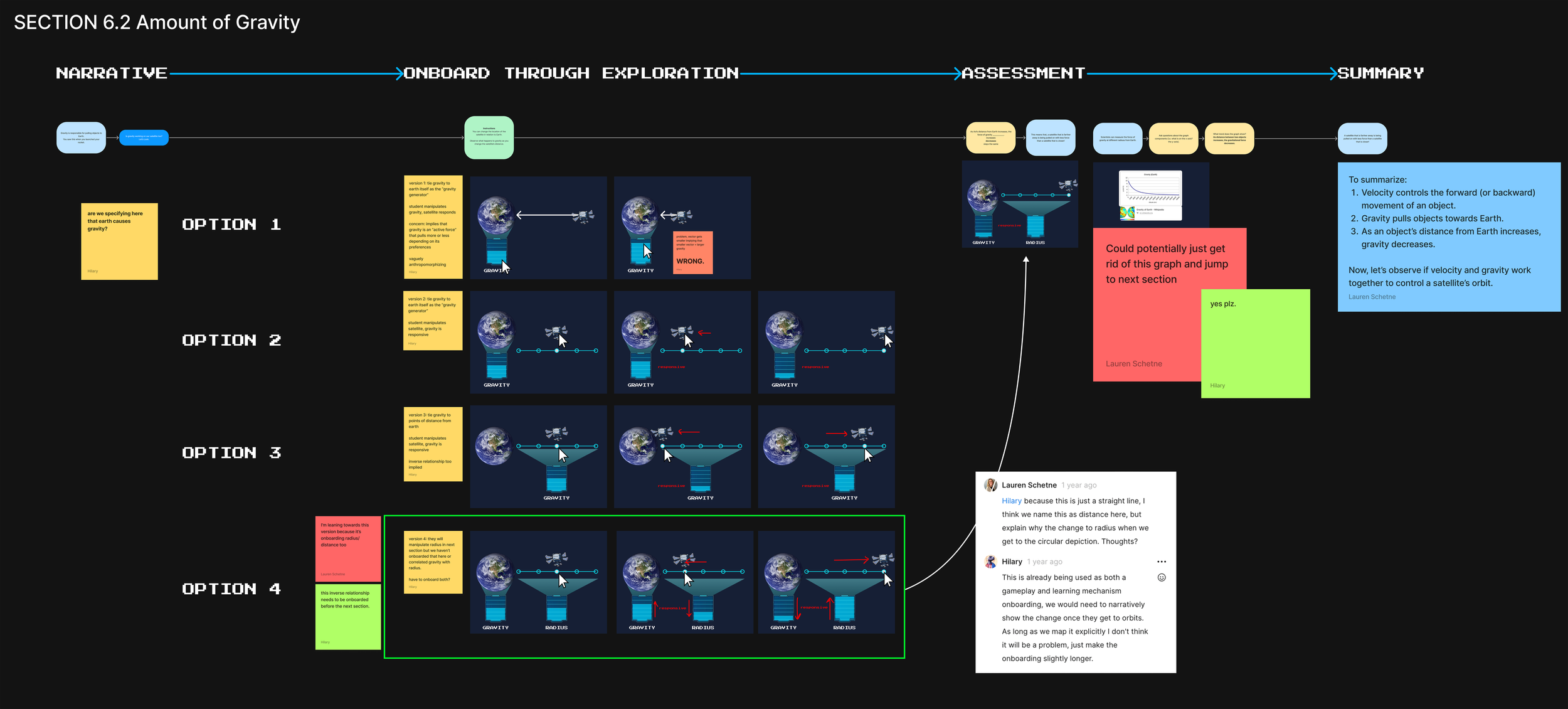
Once the core gameplay at the highest complexity is in place, I work backwards through the narrative text with the science writer to implement onboarding for the various mechanics the student will need to understand in order to play the game.
At the same time, I work with the science writer to pace out the informational delivery of the entire narrative.
I organize the story within the outline into a linear narrative that introduces each new mechanic, story point, and visual environment logically and intuitively.
I pace out the informational delivery with text and visuals, rearranging progression as needed to ensure that the entire systematic flow of learning content flows narratively and intuitively.
I propose dialogue for the characters, organizing how information will be delivered (visually, animation, through interaction, through dialogue, through narration).
I sketch rapidly in order to organize information in collaboration with the science writer, laying out how text and visuals will interact on screen to articulate concepts concisely and efficiently.
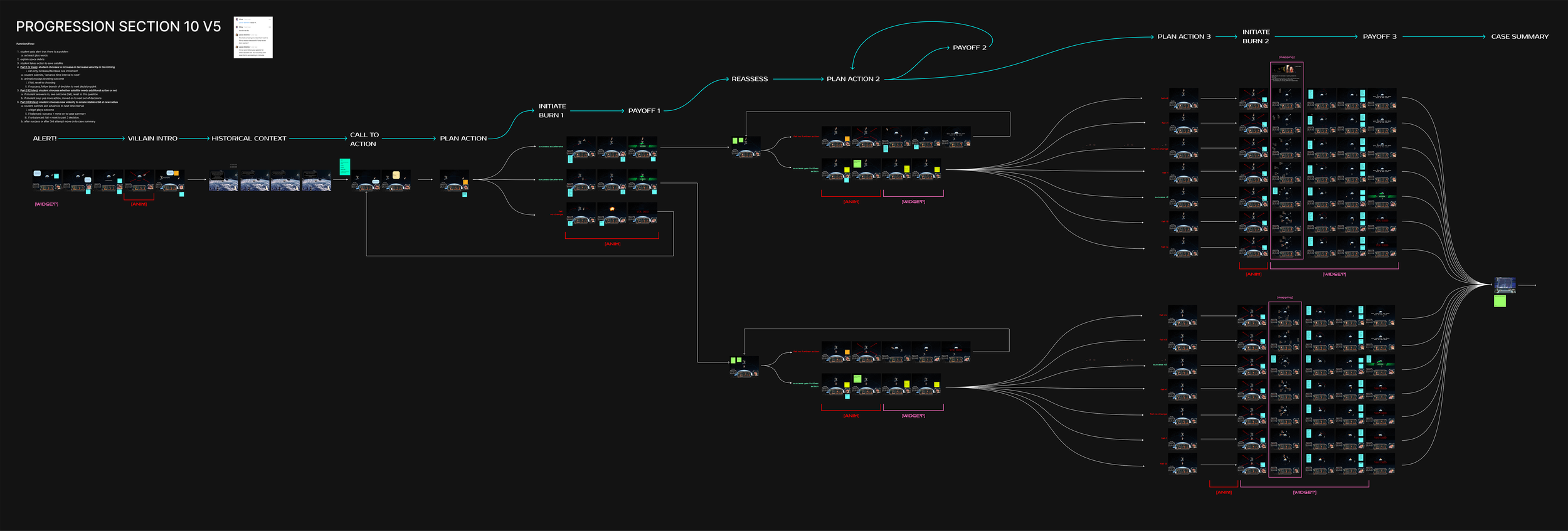
As we reach the end of this initial journey-mapping, we put together a final proposal showcasing the complete flow of the game from beginning to end. This is approved by all departments and by the director.
After this lock-in, the journey map is distributed to the departments for prototyping, previs, and playscripting.
The science writers take my narrative flow and their learning flow and develop the final playscript using language specific to educational environments
I am brought in to provide specific language for onboarding for gameplay
I move on to communicate and lead previsualization in the art department